

Global Topical Drug Delivery Market Size & Trends Report Segmented by Product (Solid, Liquid, Semi-solid, Transdermal), Site of Application (Dermal, Ophthalmic, Rectal), Application (Dermatology, Pain), End-user (Hospitals/Clinics, ASCs, Homecare), & Regional Forecast to 2031
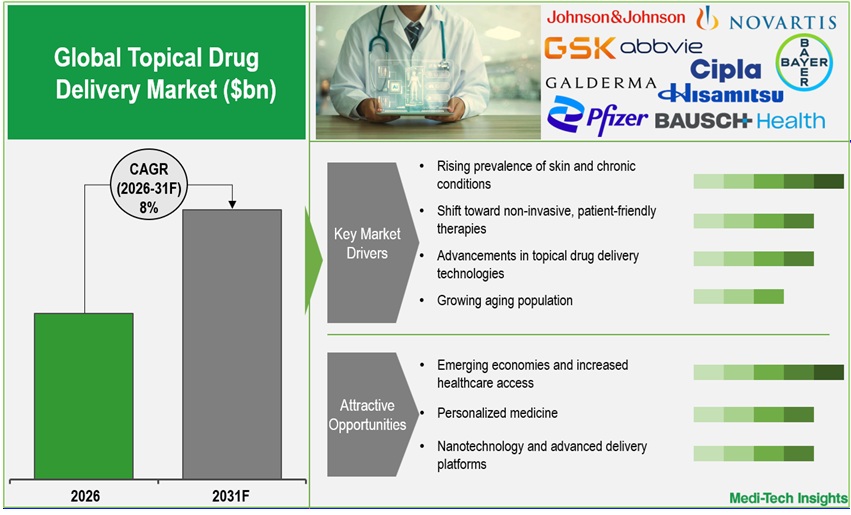
The global topical drug delivery market size is set to witness a growth rate of 8% in the next 5 years. Rising prevalence of skin and chronic conditions; shift toward non-invasive, patient-friendly therapies; advancements in drug topical delivery technologies; growing aging population; and healthcare system shifts and self-care trends are some of the key factors driving the topical drug delivery technology market. To learn more about the research report, download a sample report.
Topical Drug Delivery are systems and formulations used to administer medication dose directly to the skin or mucosal tissue among other sites to achieve localized or systemic effects. The available forms of topical medications include multiple formulations like semi-solid forms, including creams, gels, and ointments, and liquid forms like sprays, foams, and advanced dosage forms like transdermal patches among others. They can deliver a drug through the skin, enhancing drug transport across the skin barrier with controlled penetration, thus increasing the bioavailability of the drug and decreasing potential for systemic side effects. Use of topical drug delivery is prevalent within many therapeutic areas, including dermatology, pain management, hormone therapy, wound care, and ophthalmology among others. New technologies such as nanocarriers, bioadhesive systems, and microneedles are expected to continue to develop to improve delivery efficiency, increase patient compliance when using topically applied drugs, and provide more precise therapeutic results.
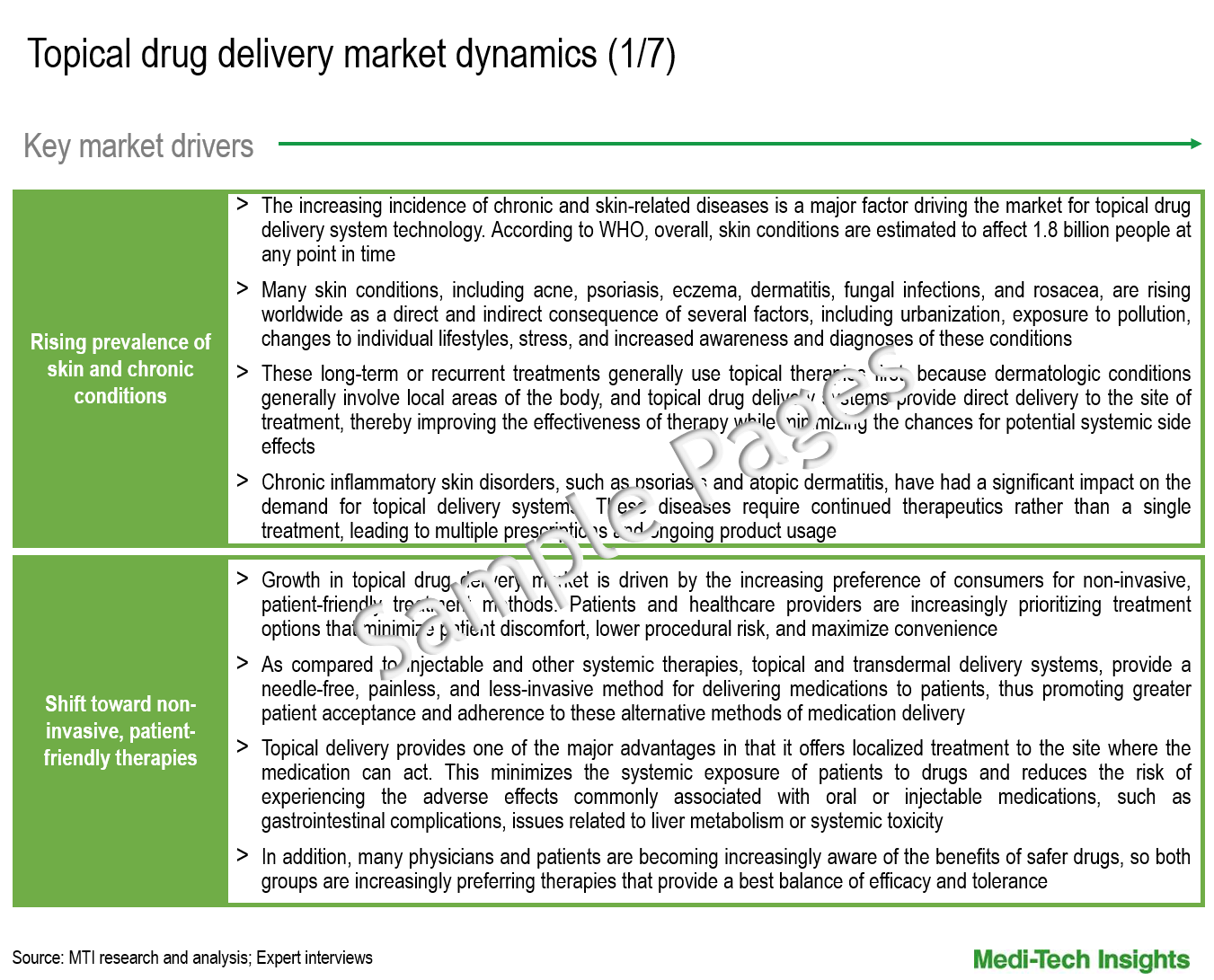
Rising prevalence of skin and chronic conditions to propel market demand
The increasing prevalence of chronic and skin-related diseases is a major factor driving the market for topical drug delivery system. According to WHO, overall, skin conditions are estimated to affect 1.8 billion people at any point in time. Many skin conditions, including acne, psoriasis, eczema, dermatitis, fungal infections, and rosacea, are rising worldwide as a direct and indirect consequence of several factors, including urbanization, exposure to pollution, changes to individual lifestyles, stress, and increased awareness and diagnoses of these conditions. These long-term or recurrent treatments generally use topical therapies first as dermatologic conditions generally involve local areas of the body, and topical drug delivery systems provide direct delivery to the site of treatment, thereby improving the effectiveness of therapy while minimizing the chances for potential systemic side effects.
Chronic inflammatory skin disorders, such as psoriasis and atopic dermatitis, have had a significant impact on the demand for topical delivery systems. These diseases require continued therapeutics rather than a single treatment, leading to multiple prescriptions and ongoing product usage. Topical corticosteroids, calcineurin inhibitors, retinoids, antifungals, and combinations are routinely used and likely to continue to be used, which continues to maintain market demand. Additionally, the rising prevalence of skin infections that are resistant to antibiotics has spurred the development of advanced topical antimicrobial formulations and controlled-delivery systems.
Chronic conditions beyond just dermatology are broadening the scope of topical drug delivery. Diabetic patients often suffer from skin complications, thereby creating a need for specialized topical wound care and antimicrobial products. Chronic pain management is also transitioning towards the use of transdermal patches and topical non-steroidal anti-inflammatory drugs (NSAIDs) to mitigate the gastrointestinal and systemic safety risks associated with taking oral medications.
The global population is also aging, resulting in an elderly population which has greater susceptibility to chronic skin conditions, dry skin, pressure ulcers, and inflammatory disorders. As this trend continues, the need for safe and easy-to-use non-invasive therapies that can be self-administered is likely to increase. Additionally, as healthcare access improves and patient knowledge/awareness about their medical and aesthetic skin conditions rises, the number of patients seeking treatment for such conditions is increasing. Therefore, pharmaceutical companies are focusing on developing novel topical like, nanocarrier systems; bioadhesive systems; and enhanced penetration formulations to improve drug efficacy and patient compliance.
Thus, as the burden of skin and chronic conditions increases, so does the demand for effective localized and patient-friendly therapeutic solutions, which in turn is driving the growth of the topical drug delivery market.
To learn more about this report, download the PDF brochure
Shift toward non-invasive, patient-friendly therapies is driving the market growth
Growth in topical drug delivery market is driven by the increasing preference of consumers for non-invasive, patient-friendly treatment methods. Patients and healthcare providers are increasingly prioritizing treatment options that minimize patient discomfort, lower procedural risk, and maximize convenience. As compared to injectable and other systemic therapies, topical and transdermal delivery systems, provide a needle-free, painless, and less-invasive method for delivering medications to patients, thus promoting greater patient acceptance and adherence to these alternative methods of medication delivery.
Topical delivery provides one of the major advantages by offering localized treatment to the site where the medication can act. This minimizes the systemic exposure of patients to drugs and reduces the risk of experiencing the adverse effects commonly associated with oral or injectable medications, such as gastrointestinal complications, issues related to liver metabolism or systemic toxicity. In addition, many physicians and patients are becoming increasingly aware of the benefits of safer drugs, so both groups are increasingly preferring therapies that provide a best balance of efficacy and tolerance.
As more people seek to manage chronic diseases at home, there is increased demand for self-administrated easy-to-use dosage forms like creams, gels, ointments, sprays, and transdermal patches. These formulations enable patients suffering from chronic conditions such as chronic pain, hormonal deficiencies, dermatologic disorders, and inflammatory diseases to manage their condition without needing to visit the hospital multiple times. Furthermore, this increase in the use of home-based self-medication is consistent with other ongoing trends in healthcare like increasing outpatient care, remote monitoring, and lower hospitalization costs. Transdermal patches specifically allow for controlled and sustained drug delivery over an extended period, improving dosing accuracy, and decreasing the number of times per day that a patient must administer medication.
The increasing number of patients with needle phobia is also a major contributing factor to this trend. Many people fear needles causing anxiety related to receiving an injection that disrupts compliance with prescribed therapies. By switching from injections to topical alternatives eliminates this barrier to treatment by making it easier and more accessible for patients across all populations including pediatrics, geriatrics, and or those patients who are prone to sensitivity.
Several technological developments continue supporting this trend. Advancements like microneedle patches, nano-enhanced formulations, and bioadhesive delivery systems among others are allowing for improved absorption and drug delivery through minimally invasive methods. These devices provide a bridge between topical treatment delivery systems and systemic therapies thereby expanding the number of medications that can be delivered through the skin.
Overall, the healthcare industry’s growing focus on comfort, convenience, safety, and home-based care is steadily driving the adoption of topical drug delivery, positioning them as a preferred therapeutic modality across multiple medical and aesthetic applications.
To learn more about this report, download the PDF brochure
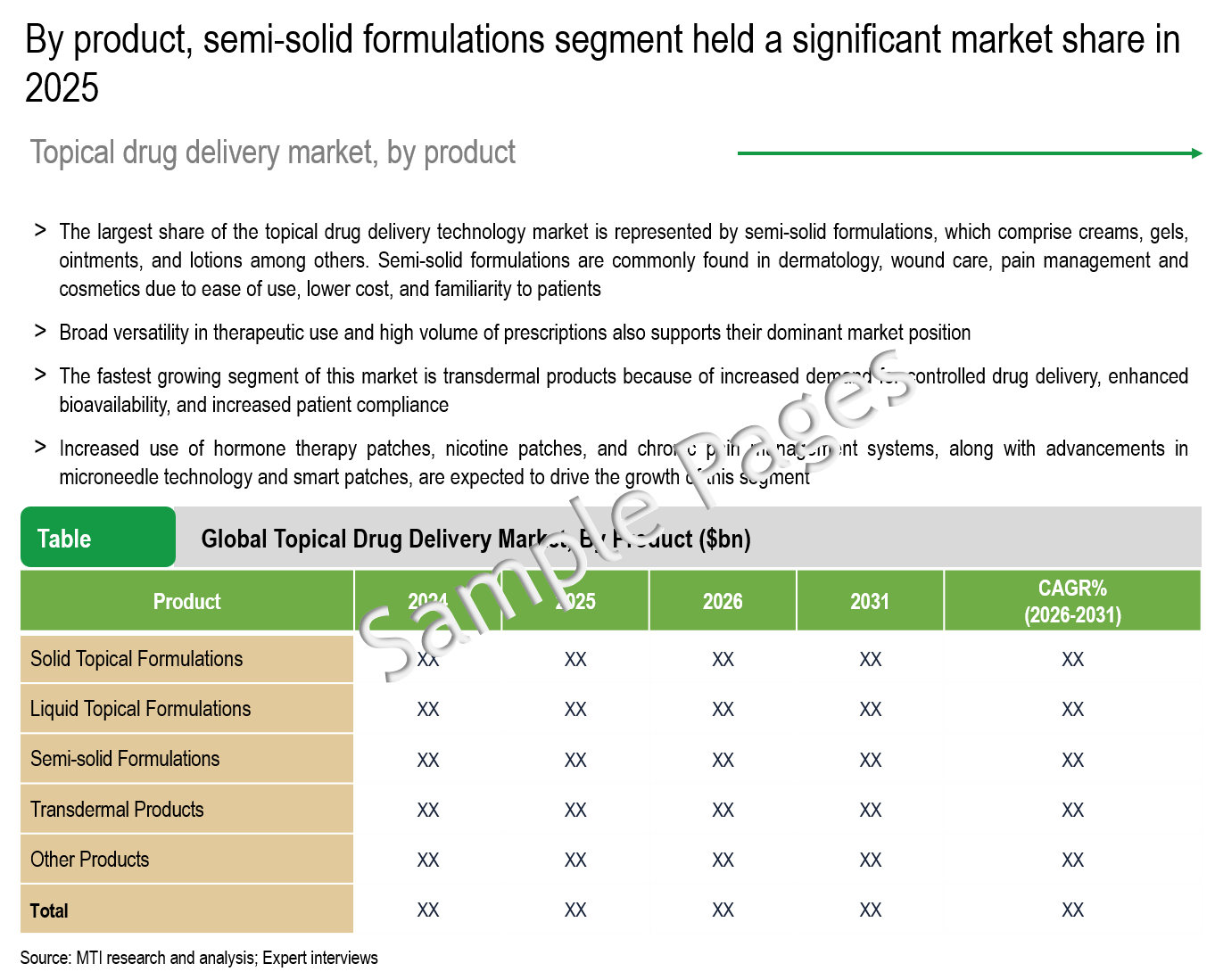
Product Segment Outlook: Semi-solid formulations lead the market while transdermal products register the fastest growth driven by advanced controlled-delivery technologies
The largest share of the topical drug delivery market is represented by semi-solid formulations, which comprise creams, gels, ointments, and lotions among others. Semi-solid formulations are commonly found in dermatology, wound care, pain management and cosmetics due to ease of use, lower cost, and familiarity to patients. Broad versatility in therapeutic use and high volume of prescriptions also supports their leading market position. The fastest growing segment of this market is transdermal products due to increased demand for controlled drug delivery, enhanced bioavailability, and increased patient compliance. Increased use of hormone therapy patches, nicotine patches, and chronic pain management systems, along with advancements in microneedle technology and smart patches, are expected to drive the growth of this segment.
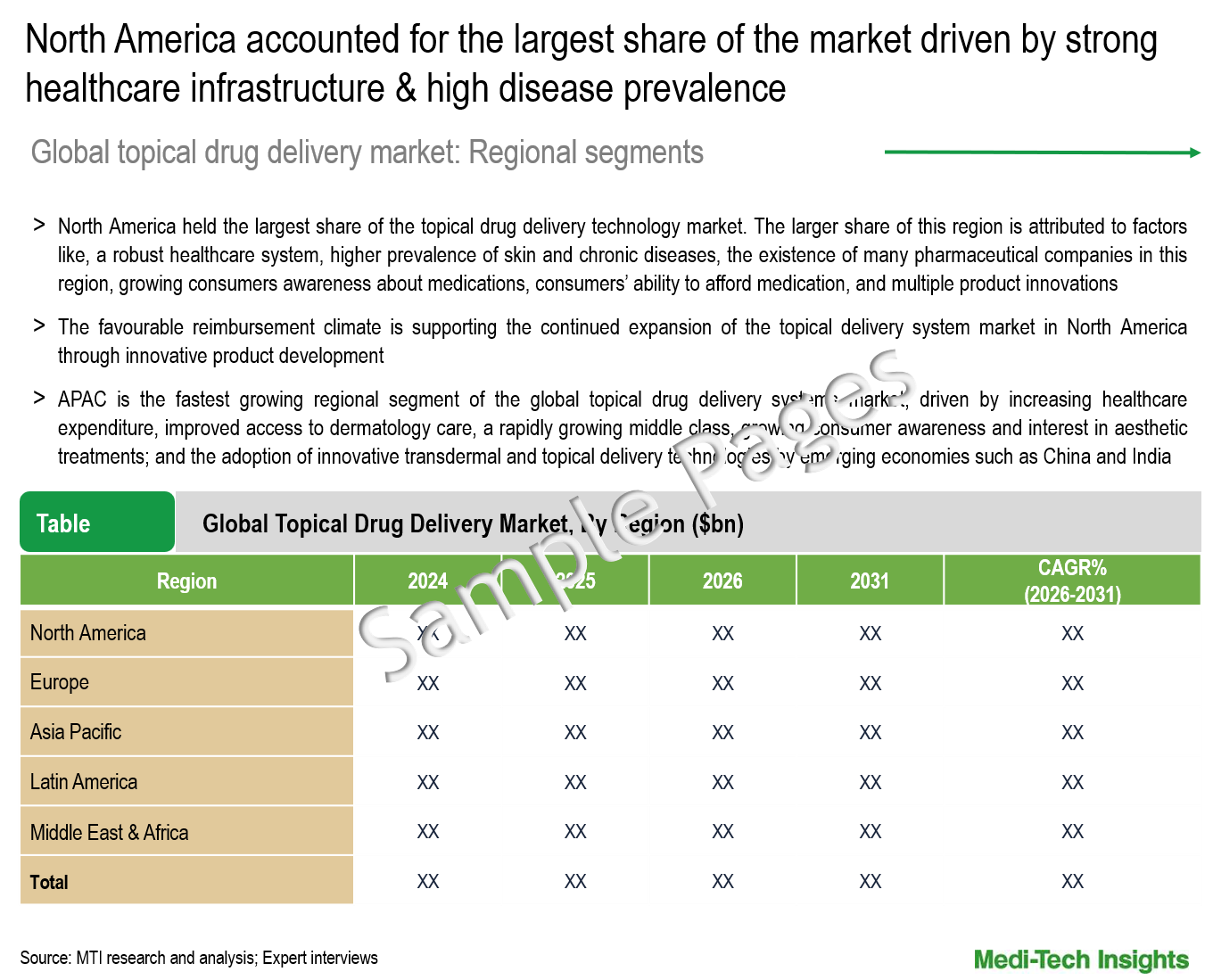
Regional Outlook: North America accounted for the largest share of the topical drug delivery market driven by strong healthcare infrastructure and high disease prevalence
North America held the largest share of the topical drug delivery market. The larger share of this region is attributed to factors like, a robust healthcare system, higher prevalence of skin and chronic diseases, existence of many pharmaceutical companies in this region, growing consumer awareness about medications, consumers’ ability to afford medication, and multiple product innovations. The favourable reimbursement climate is supporting the continued expansion of the topical delivery system market in North America through innovative product development. APAC is the fastest growing regional segment of the global topical drug delivery systems market, driven by increasing healthcare expenditure, improved access to dermatology care, a rapidly growing middle class, growing consumer awareness and interest in aesthetic treatments; and the adoption of innovative transdermal and topical delivery by emerging economies such as China and India.
Competitive Landscape Analysis
The global topical drug delivery market is marked by the presence of established and emerging market players such as Johnson & Johnson (US); Galderma (Switzerland); GSK plc (UK); Novartis AG (Switzerland); Bayer AG (Germany); AbbVie Inc. (US); Bausch Health Companies Inc. (Canada); Hisamitsu Pharmaceutical Co., Inc. (Japan); Pfizer Inc. (US); and Cipla Ltd. (India); among others. Some of the key strategies adopted by market players include new product launches and approvals, acquisitions, and strategic partnerships, agreements, and collaborations.

Get a sample report for competitive landscape analysis
Growth strategies adopted by players to establish their foothold in the market
Players operating in this market are adopting various growth strategies such as new product launches and approvals, acquisitions, and strategic partnerships, agreements, and collaborations, to garner market share. For instance,
- In September 2025, Incyte announced that the US FDA approved Opzelura (ruxolitinib) cream 1.5%, a topical JAK inhibitor, for the short-term and non-continuous chronic treatment of mild to moderate atopic dermatitis in non-immunocompromised children aged 2 years and older. The approval, supported by Phase 3 TRuE-AD3 data demonstrating significant efficacy and no new safety concerns, marks the third US approval for the topical therapy and expands its pediatric indication
- In August 2025, Extrovis AG and Dr Reddy’s Laboratories launched Fluorouracil Cream 0.5 per cent, a topical authorized generic and therapeutic equivalent of Carac (fluorouracil cream) 0.5 per cent, in the US market following its USFDA approval. The topical cream, manufactured in Texas, is indicated for the treatment of multiple actinic or solar keratoses of the face and anterior scalp, expanding access to a cost-effective dermatology therapy
- In October 2024, Organon completed its acquisition of Dermavant, adding VTAMA (tapinarof) cream 1%, a nonbiologic, non-steroidal topical therapy approved in the US for plaque psoriasis, to its dermatology portfolio. The topical treatment expands Organon’s immuno-dermatology capabilities, with an additional supplemental application under FDA review for potential use in atopic dermatitis
- In February 2024, Arcutis and Sato Pharmaceutical entered a strategic collaboration and licensing agreement for the development and commercialization of topical roflumilast cream and foam in Japan. The agreement supports expansion of a novel non-steroidal topical PDE4 inhibitor for inflammatory skin diseases including plaque psoriasis, seborrheic dermatitis, and atopic dermatitis in the Japanese market
Report Scope
|
Report Metric |
Details |
|
Base Year Considered |
2025 |
|
Historical Data |
2024 – 2025 |
|
Forecast Period |
2026 – 2031 |
|
Growth Rate |
8% |
|
Segment Scope |
Product, Site of Application, Therapeutic Application, End User |
|
Regional Scope |
|
|
Market Drivers |
|
|
Attractive Opportunities |
|
|
Key Companies Mapped |
Johnson & Johnson (US); Galderma (Switzerland); GSK plc (UK); Novartis AG (Switzerland); Bayer AG (Germany); AbbVie Inc. (US); Bausch Health Companies Inc. (Canada); Hisamitsu Pharmaceutical Co., Inc. (Japan); Pfizer Inc. (US); and Cipla Ltd. (India); among others |
|
Report Highlights |
Market Size & Forecast, Growth Drivers & Restraints, Trends, Competitive Analysis |
Global Topical Drug Delivery Market Segmentation
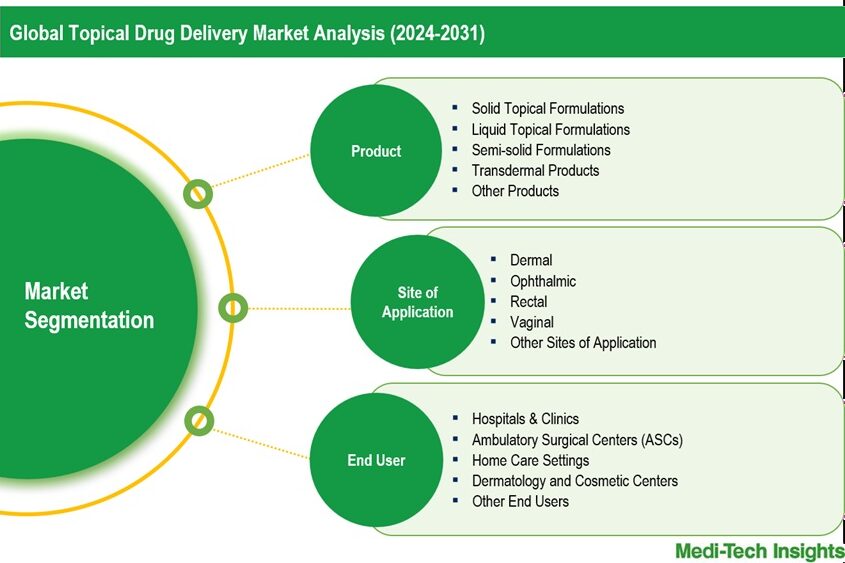
This report by Medi-Tech Insights provides the size of the global topical drug delivery market at the regional- and country-level from 2024 to 2031. The report further segments the market based on product, site of application, therapeutic application, and end user.
- Solid Formulations
- Powders
- Suppositories
- Other Solid Formulations
- Liquid Formulations
- Suspensions
- Emulsions
- Other Liquid Formulations
- Semi-solid Formulations
- Creams
- Ointments
- Lotions
- Gels
- Pastes
- Other Semi-solid Formulations
- Transdermal Products
- Transdermal Patches
- Transdermal Gels
- Transdermal Sprays
- Other Transdermal Products
- Other Products
Market Size & Forecast (2024-2031), By Site of Application, USD Billion
- Dermal
- Ophthalmic
- Rectal
- Vaginal
- Other Sites of Application
Market Size & Forecast (2024-2031), By Therapeutic Application, USD Billion
- Dermatology
- Wound Care
- Pain Management
- Ophthalmology
- Other Therapeutic Applications
Market Size & Forecast (2024-2031), By End User, USD Billion
- Hospitals & Clinics
- Ambulatory Surgical Centers (ASCs)
- Home Care Settings
- Dermatology and Cosmetic Centers
- Other End Users
Market Size & Forecast (2024-2031), By Region, USD Billion
- North America
- US
- Canada
- Europe
- UK
- Germany
- France
- Italy
- Spain
- Rest of Europe
- Asia Pacific
- China
- India
- Japan
- Rest of Asia Pacific
- Latin America
- Middle East & Africa
- Introduction
- Introduction
- Market Scope
- Market Definition
- Segments Covered
- Regional Segmentation
- Research Timeframe
- Currency Considered
- Study Limitations
- Stakeholders
- List of Abbreviations
- Key Conferences and Events (2026-2027)
- Research Methodology
- Secondary Research
- Primary Research
- Market Estimation
- Bottom-Up Approach
- Top-Down Approach
- Market Forecasting
- Executive Summary
- Topical Drug Delivery Market Snapshot (2026-2031)
- Segment Overview
- Regional Snapshot
- Competitive Insights
- Market Overview
- Market Dynamics
- Drivers
- Rising prevalence of skin and chronic conditions
- Shift toward non-invasive, patient-friendly therapies
- Advancements in topical drug delivery
- Growing aging population
- Healthcare system shifts and self-care trends
- Restraints
- Regulatory and approval complexity
- Technical and manufacturing barriers
- Competition from other drug delivery routes
- Opportunities
- Emerging economies and increased healthcare access
- Personalized medicine
- Nanotechnology and advanced delivery platforms
- Digital health integration
- Key Market Trends
- Microneedle patch adoption
- Smart patches with digital feedback
- Shift toward natural and organic ingredients
- Unmet Market Needs
- Industry Speaks
- Drivers
- Market Dynamics
- Global Topical Drug Delivery Market Size & Forecast (2024-2031), By Product, USD Billion
- Introduction
- Solid Formulations
- Powders
- Suppositories
- Other Solid Formulations
- Liquid Formulations
- Suspensions
- Emulsions
- Other Liquid Formulations
- Semi-solid Formulations
- Creams
- Ointments
- Lotions
- Gels
- Pastes
- Other Semi-solid Formulations
- Transdermal Products
- Transdermal Patches
- Transdermal Gels
- Transdermal Sprays
- Other Transdermal Products
- Other Products
- Global Topical Drug Delivery Market Size & Forecast (2024-2031), By Site of Application, USD Billion
- Introduction
- Dermal
- Ophthalmic
- Rectal
- Vaginal
- Other Sites of Application
- Global Topical Drug Delivery Market Size & Forecast (2024-2031), By Therapeutic Application, USD Billion
- Introduction
- Dermatology
- Wound Care
- Pain Management
- Ophthalmology
- Other Therapeutic Applications
- Global Topical Drug Delivery Market Size & Forecast (2024-2031), By End User, USD Billion
- Introduction
- Hospitals & Clinics
- Ambulatory Surgical Centers (ASCs)
- Home Care Settings
- Dermatology and Cosmetic Centers
- Other End Users
- Global Topical Drug Delivery Market Size & Forecast (2024-2031), By Region, USD Billion
- Introduction
- North America Topical Drug Delivery Market Size & Forecast (2024-2031), By Country, USD Billion
- US
- Market Size & Forecast, By Product, (USD Billion)
- Market Size & Forecast, By Site of Application (USD Billion)
- Market Size & Forecast, By Therapeutic Application (USD Billion)
- Market Size & Forecast, By End User (USD Billion)
- Canada
- Market Size & Forecast, By Product, (USD Billion)
- Market Size & Forecast, By Site of Application (USD Billion)
- Market Size & Forecast, By Therapeutic Application (USD Billion)
- Market Size & Forecast, By End User (USD Billion)
- US
- Europe Topical Drug Delivery Market Size & Forecast (2024-2031), By Country, USD Billion
- UK
- Market Size & Forecast, By Product, (USD Billion)
- Market Size & Forecast, By Site of Application (USD Billion)
- Market Size & Forecast, By Therapeutic Application (USD Billion)
- Market Size & Forecast, By End User (USD Billion)
- Germany
- Market Size & Forecast, By Product, (USD Billion)
- Market Size & Forecast, By Site of Application (USD Billion)
- Market Size & Forecast, By Therapeutic Application (USD Billion)
- Market Size & Forecast, By End User (USD Billion)
- France
- Market Size & Forecast, By Product, (USD Billion)
- Market Size & Forecast, By Site of Application (USD Billion)
- Market Size & Forecast, By Therapeutic Application (USD Billion)
- Market Size & Forecast, By End User (USD Billion)
- Italy
- Market Size & Forecast, By Product, (USD Billion)
- Market Size & Forecast, By Site of Application (USD Billion)
- Market Size & Forecast, By Therapeutic Application (USD Billion)
- Market Size & Forecast, By End User (USD Billion)
- Spain
- Market Size & Forecast, By Product, (USD Billion)
- Market Size & Forecast, By Site of Application (USD Billion)
- Market Size & Forecast, By Therapeutic Application (USD Billion)
- Market Size & Forecast, By End User (USD Billion)
- Rest of Europe
- Market Size & Forecast, By Product, (USD Billion)
- Market Size & Forecast, By Site of Application (USD Billion)
- Market Size & Forecast, By Therapeutic Application (USD Billion)
- Market Size & Forecast, By End User (USD Billion)
- UK
- Asia Pacific (APAC) Topical Drug Delivery Market Size & Forecast (2024-2031), By Country, USD Billion
- China
- Market Size & Forecast, By Product, (USD Billion)
- Market Size & Forecast, By Site of Application (USD Billion)
- Market Size & Forecast, By Therapeutic Application (USD Billion)
- Market Size & Forecast, By End User (USD Billion)
- Japan
- Market Size & Forecast, By Product, (USD Billion)
- Market Size & Forecast, By Site of Application (USD Billion)
- Market Size & Forecast, By Therapeutic Application (USD Billion)
- Market Size & Forecast, By End User (USD Billion)
- India
- Market Size & Forecast, By Product, (USD Billion)
- Market Size & Forecast, By Site of Application (USD Billion)
- Market Size & Forecast, By Therapeutic Application (USD Billion)
- Market Size & Forecast, By End User (USD Billion)
- Rest of Asia Pacific
- Market Size & Forecast, By Product, (USD Billion)
- Market Size & Forecast, By Site of Application (USD Billion)
- Market Size & Forecast, By Therapeutic Application (USD Billion)
- Market Size & Forecast, By End User (USD Billion)
- China
- Latin America (LATAM) Topical Drug Delivery Market Size & Forecast (2024-2031), USD Billion
- Market Size & Forecast, By Product, (USD Billion)
- Market Size & Forecast, By Site of Application (USD Billion)
- Market Size & Forecast, By Therapeutic Application (USD Billion)
- Market Size & Forecast, By End User (USD Billion)
- Middle East & Africa (MEA) Topical Drug Delivery Market Size & Forecast (2024-2031), USD Billion
- Market Size & Forecast, By Product, (USD Billion)
- Market Size & Forecast, By Site of Application (USD Billion)
- Market Size & Forecast, By Therapeutic Application (USD Billion)
- Market Size & Forecast, By End User (USD Billion)
- Competitive Landscape
- Key Players and their Competitive Positioning
- Key Player Comparison
- Segment-wise Player Mapping
- Market Share Analysis (2025)
- Company Categorization Matrix
- Dominants/Leaders
- New Entrants
- Emerging Players
- Innovative Players
- Key Strategies Assessment, By Player (2023-2026)
- New Product Launch
- Partnerships, Agreements, & Collaborations
- Mergers & Acquisitions
- Geographic Expansion
- Key Players and their Competitive Positioning
- Company Profiles*
(Business Overview, Financial Performance**, Products Offered, Recent Developments)
- Johnson & Johnson
- Galderma
- GSK plc.
- Novartis AG
- Bayer AG
- AbbVie Inc.
- Bausch Health Companies Inc.
- Hisamitsu Pharmaceutical Co., Inc.
- Pfizer Inc.
- Cipla Ltd.
- Other Prominent Players
Note: *Indicative list
**For listed companies
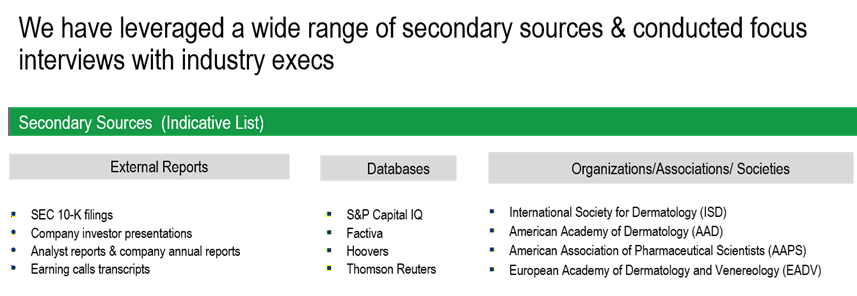
The study has been compiled based on extensive primary and secondary research.
Secondary Research (Indicative List)
Primary Research
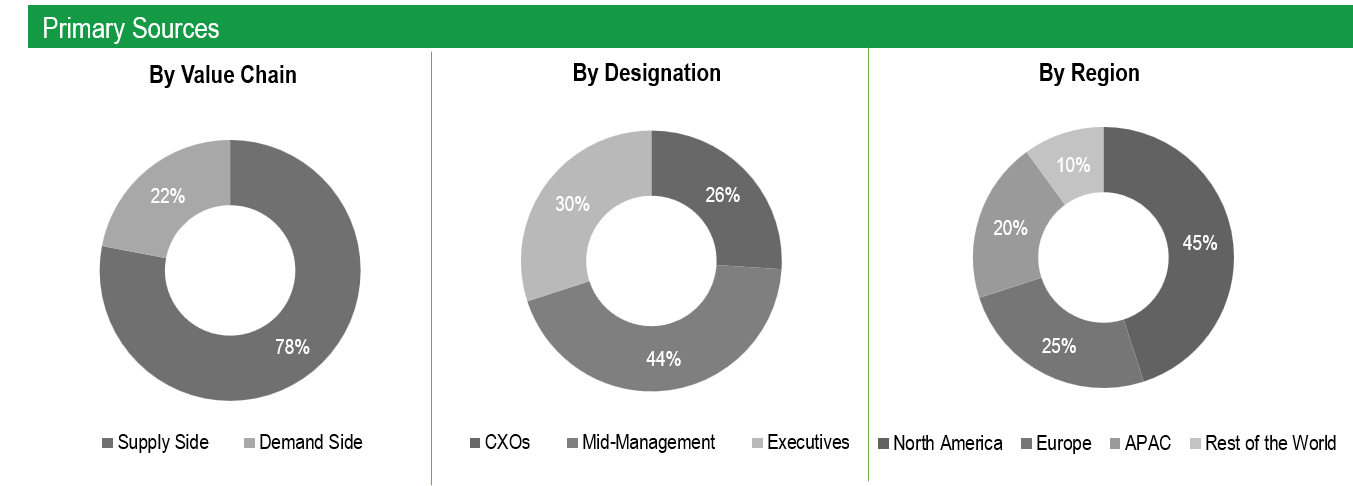
To validate research findings (market size & forecasts, market segmentation, market dynamics, competitive landscape, key industry trends, etc.), extensive primary interviews were conducted with both supply and demand-side stakeholders.
Supply Side Stakeholders:
- Senior Management Level: CEOs, Presidents, Vice-Presidents, Directors, Chief Technology Officers, Chief Commercial Officers
- Mid-Management Level: Product Managers, Sales Managers, Brand Managers, R&D Managers, Business Development Managers, Consultants
Demand Side Stakeholders:
- Hospitals & Clinics, Ambulatory Surgical Centers (ASCs), Dermatology and Cosmetic Centers, and others
Breakdown of Primary Interviews
Market Size Estimation
Both ‘Top-Down & Bottom-Up Approaches’ were used to derive market size estimates and forecasts
Data Triangulation
Research findings derived through secondary sources & internal analysis was validated with Primary Interviews, Internal Knowledge Repository and Company’s Sales Data
Features of the Report
- Comprehensive Market Coverage
- Market Size and Forecast
- Geographic & Segment Deep Dives
- Strategic Insights & Competitive Landscape
- Timely & Updated Data
- Growth Indicators & Future Outlook
- Quick Turnaround on Queries
- Analyst Support
- Report Customization Available
- Reports in PDF & Excel
