

Global Diabetes Drug Delivery Devices Market Size Report Segmented by Product (Pens, Pumps, Smart/Connected Devices), Route of Administration (Subcutaneous, Intradermal, Intranasal), Diabetes Type (Type 1, Type 2), End User & Regional Forecast to 2031
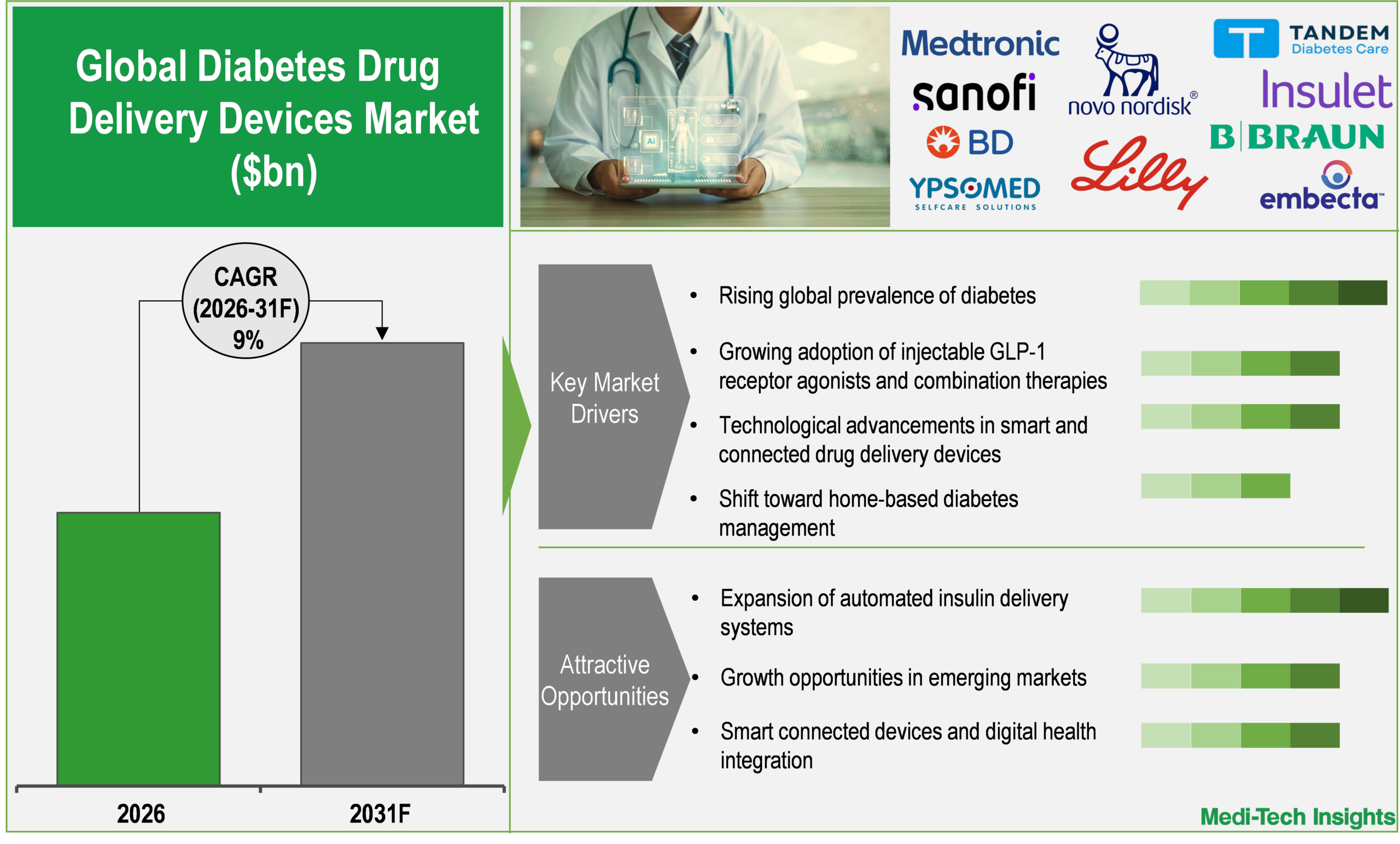
The global diabetes drug delivery devices market size is set to grow at a CAGR of 9% over the next 5 years. Rising global prevalence of diabetes, growing adoption of insulin therapy, technological advancements in smart and connected drug delivery devices, growing adoption of injectable GLP-1 receptor agonists and combination therapies, shift toward home-based diabetes management, rising geriatric population, and increasing obesity and lifestyle-related diseases are some key factors driving the growth of the diabetes drug delivery devices market. To learn more about the research report, download a sample report.
Diabetes drug-delivery technologies include a range of medical equipment, such as insulin pens, insulin pumps, syringes, patch pumps, and jet injectors that deliver insulin and/or other medications used to manage diabetes along with advanced automated insulin delivery systems. The goal of developing these devices is for precision dosing, convenient administration, reduced discomfort associated with injections, and long-term treatment compliance; in recent years, many modern diabetes drug delivery devices have incorporated digital features such as connectivity, and dose tracking, among others, and are further combined with continuous glucose monitoring systems to provide personalized management of diabetes, improve glycemic control, and improve clinical outcomes for people with diabetes.
Rising global prevalence of diabetes diseases to propel market demand
The increasing prevalence of diabetes is one of the main drivers fueling the growth of the market for diabetes drug delivery systems. According to the WHO, the global diabetes population increased more than fourfold, from 200 million in 1990 to 830 million in 2022, and more than half of people living with diabetes did not take medication for their diabetes in 2022, highlighting a substantial need for improved diabetes care and drug delivery solutions. The increasing rate of Type 1 and Type 2 diabetes is largely due to an aging population, sedentary habits, obesity, poor diet, and urbanization has expanded the global patient pool requiring long-term glucose management. Diabetes is a chronic illness that typically requires regular doses of insulin and/or injection; therefore, demand for reliable, convenient, and accurate drug delivery systems will continue to rise. Healthcare practitioners are beginning to recommend sophisticated drug delivery systems, including insulin pens, insulin pumps, and wearable patch pumps, to increase adherence to treatment and achieve effective glycemic control.
Also, the expansion of the number of diagnosed patients is resulting in greater awareness of effective diabetes management and thus increased use of user-friendly and technologically advanced devices. Furthermore, the ever-increasing burden of diabetes-related complications has intensified the need for precise medication delivery and will help sustain the international demand for new diabetes drug delivery technologies.
To learn more about this report, download the PDF brochure
Growing adoption of insulin therapy is fueling the demand for diabetes drug delivery devices
Insulin therapy continues to be one of the main influencing factors of the diabetes drug delivery devices market due to patients having greater access to insulin to help manage blood glucose levels and avoid complications arising from type 1 or type 2 diabetes. In addition to patients with type 1 diabetes, the use of insulin by patients with advanced type 2 diabetes is growing. As many type 2 diabetic patients live longer due to improved life expectancy and have more stringent blood glucose level control indicated by current treatment recommendations, there is an increased need for insulin. Therefore, a growing number of patients rely on convenient, accurate, and user-friendly delivery devices, including insulin pens, pumps, patch pumps, or wearables, thus creating greater need for advanced delivery technologies to enhance dosage precision, improve treatment adherence, improve patient outcomes, and decrease issues associated with administering multiple daily injections.
In addition, as there is an increase in public awareness regarding the value of insulin therapy along with increased access to diabetes care and improved delivery systems, the acceleration of insulin use will therefore continue to expand throughout the global market.
To learn more about this report, download the PDF brochure
Product Segment Outlook
Among product types, pen injectors account for the largest share of the diabetes drug delivery devices market. This segment includes both insulin pens and pen injectors used for GLP-1 receptor agonists and other injectable diabetes therapies. Pen injectors dominate the market owing to their ease of use, accurate dose delivery, portability, and patient-friendly design, making them a preferred choice for self-administration in both type 1 and type 2 diabetes. Their ability to improve treatment adherence, reduce dosing errors, and support home-based diabetes management has led to widespread adoption across developed and emerging markets. Furthermore, the increasing use of GLP-1 receptor agonists and combination injectable therapies is expanding the addressable market for pen injector devices.
Meanwhile, smart and connected drug delivery devices are expected to register the fastest growth during the forecast period. The growing integration of Bluetooth connectivity, mobile applications, dose-tracking capabilities, and real-time data sharing is transforming diabetes management by enabling personalized and data-driven care. Smart insulin pens, connected injectors, and digitally enabled wearable delivery systems improve medication adherence, facilitate remote patient monitoring, and seamlessly integrate with continuous glucose monitoring (CGM) platforms and digital health ecosystems. The increasing adoption of automated diabetes management solutions, coupled with advancements in connected healthcare technologies and rising demand for patient-centric care, is expected to accelerate the uptake of smart and connected drug delivery devices worldwide.
Regional Outlook: High diabetes prevalence, strong healthcare infrastructure, and rapid adoption of advanced insulin delivery technologies position North America as the largest diabetes drug delivery devices market
North America accounted for the largest share of the diabetes drug delivery devices market. North America's leading position in this market can be attributed to its large percent of people diagnosed with diabetes, acceptance of insulin therapy, effective healthcare systems, positive reimbursement policies, and the implementation of new technology, including insulin pumps, smart insulin pens, disposable delivery devices and automated insulin delivery systems. In addition to these factors, there are many significant players currently operating within the diabetes product market to create new innovations related to diabetes care and treatment.
Conversely, due to significant increase in the number of people with diabetes, increased healthcare expenditures, better access to diabetes-related services, and the increase of public knowledge about diabetes management strategies, the APAC region is expected to register the highest growth in the global diabetes drug delivery device market. Countries like China and India have a rapidly increasing diabetic population due to urbanization trends, population demographics, and lifestyle adjustments. Ultimately, if the region continues to invest in new diabetes drug delivery technologies and further into healthcare industry advancements, it is becoming a lucrative worldwide diabetes drug delivery device market.
Competitive Landscape Analysis
The global diabetes drug delivery devices market is marked by the presence of established and emerging market players such as-
- Novo Nordisk A/S (Denmark)
- Sanofi (France)
- Eli Lilly and Company (US)
- Medtronic (Ireland)
- Insulet Corporation (US)
- Becton, Dickinson and Company (BD) (US)
- Tandem Diabetes Care, Inc. (US)
- Ypsomed (Switzerland)
- Braun SE (Germany)
- Embecta Corp (US)

Get a sample report for competitive landscape analysis
Growth strategies adopted by players to establish their foothold in the diabetes drug delivery devices market
Players operating in this market are adopting various growth strategies such as new product launches and approvals; acquisitions; expansions; and strategic partnerships, agreements, and collaborations, to garner market share. For instance,
- In June 2026, Modular Medical commercially launched its Pivot tubeless insulin patch pump, marking the company's transition into a commercial-stage medical device company following FDA 510(k) clearance in April 2026. The wearable, fully electronic insulin pump is designed to simplify insulin therapy through a removable two-part design, intuitive interface, and flexible form factor that supports everyday activities while maintaining clinical accuracy and connectivity
- In May 2026, embecta completed the acquisition of Owen Mumford Holdings Limited, gaining access to its drug delivery technologies. The acquisition strengthens embecta’s position in drug delivery devices by expanding its capabilities across diabetes and other markets while enhancing its pharmaceutical partnership and manufacturing offerings
- In August 2024, Abbott entered a global partnership with Medtronic to integrate its FreeStyle Libre continuous glucose monitoring technology with Medtronic’s automated insulin delivery and smart insulin pen systems. The collaboration aims to enhance automated insulin management, improve glycemic control, and expand access to connected diabetes care solutions for millions of insulin-dependent patients worldwide
Report Scope
|
Report Metric |
Details |
|
Base Year Considered |
2025 |
|
Historical Data |
2024 – 2025 |
|
Forecast Period |
2026 – 2031 |
|
Growth Rate |
9% |
|
Segment Scope |
Product, Route of Administration, Diabetes Type, and End User |
|
Regional Scope |
|
|
Market Drivers |
|
|
Attractive Opportunities |
|
|
Key Companies Mapped |
Novo Nordisk A/S (Denmark); Sanofi (France); Eli Lilly and Company (US); Medtronic (Ireland); Insulet Corporation (US); Becton, Dickinson and Company (BD) (US); Tandem Diabetes Care, Inc. (US); Ypsomed (Switzerland); B. Braun SE (Germany); and Embecta Corp (US), among others |
|
Report Highlights |
Market Size & Forecast, Growth Drivers & Restraints, Trends, Competitive Analysis |
Global Diabetes Drug Delivery Devices Market Segmentation
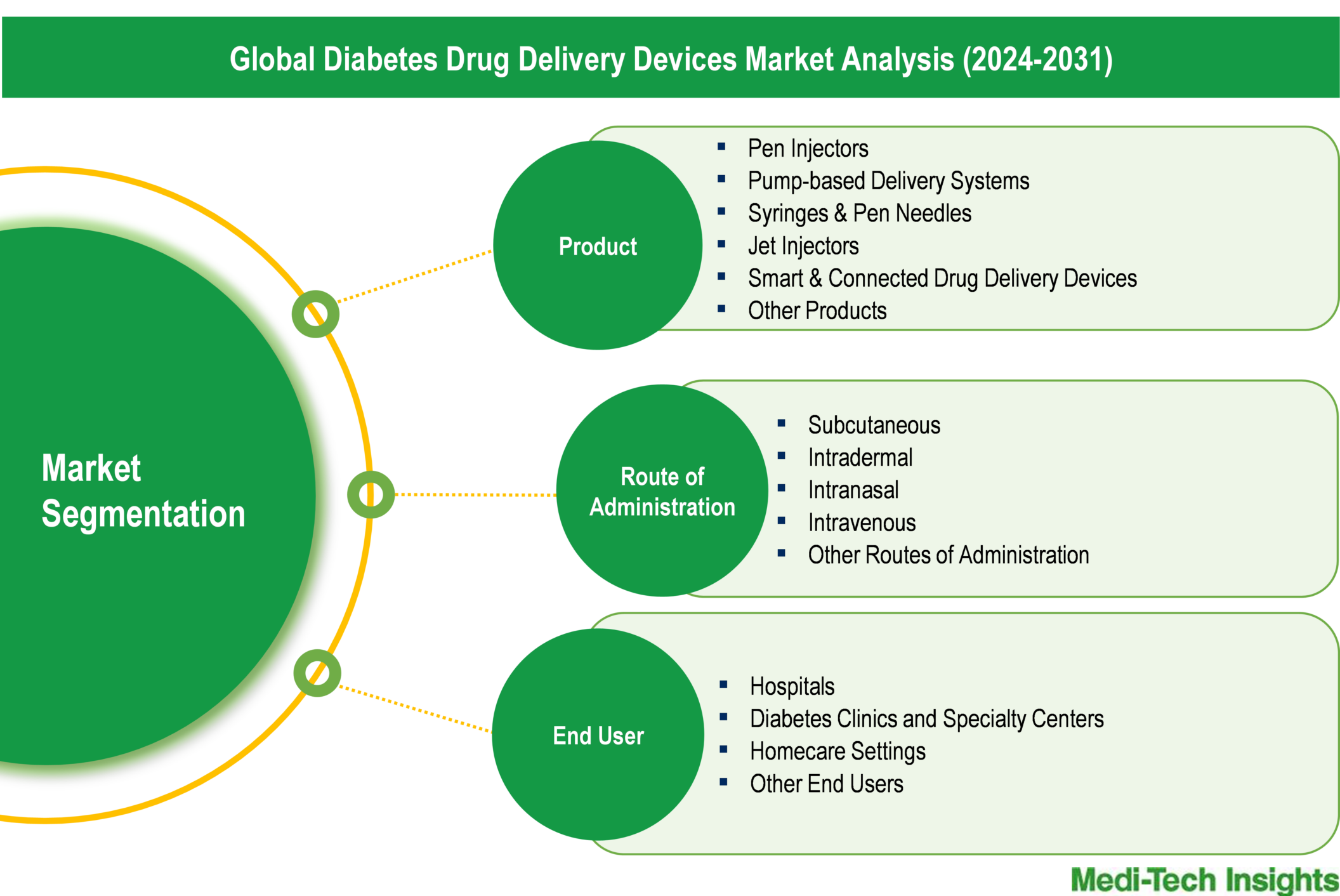
This report by Medi-Tech Insights provides the size of the global diabetes drug delivery devices market at the regional and country-level from 2024 to 2031. The report further segments the market by product, route of administration, diabetes type, and end user.
Market Size & Forecast (2024-2031), By Product, USD Billion
- Pen Injectors
- Disposable Pens
- Reusable Pens
- Pump-based Delivery Systems
- External Pumps
- Patch Pumps
- Automated Insulin Delivery Systems
- Syringes & Pen Needles
- Jet Injectors
- Smart & Connected Drug Delivery Devices
- Smart Pens
- Connected Injectors
- Bluetooth-enabled Delivery Systems
- Other Products
Market Size & Forecast (2024-2031), By Route of Administration, USD Billion
- Subcutaneous
- Intradermal
- Intranasal
- Intravenous
- Other Routes of Administration
Market Size & Forecast (2024-2031), By Diabetes Type, USD Billion
- Type 1 Diabetes
- Type 2 Diabetes
- Gestational Diabetes
Market Size & Forecast (2024-2031), By End User, USD Billion
- Hospitals
- Diabetes Clinics and Specialty Centers
- Homecare Settings
- Other End Users
Market Size & Forecast (2024-2031), By Region, USD Billion
- North America
- US
- Canada
- Europe
- UK
- Germany
- France
- Italy
- Spain
- Rest of Europe
- Asia Pacific
- China
- India
- Japan
- Rest of Asia Pacific
- Latin America
- Middle East & Africa
Related Reports:
- Introduction
- Introduction
- Market Scope
- Market Definition
- Segments Covered
- Regional Segmentation
- Research Timeframe
- Currency Considered
- Study Limitations
- Stakeholders
- List of Abbreviations
- Key Conferences and Events (2026-2027)
- Research Methodology
- Secondary Research
- Primary Research
- Market Estimation
- Bottom-Up Approach
- Top-Down Approach
- Market Forecasting
- Executive Summary
- Diabetes Drug Delivery Devices Market Snapshot (2026-2031)
- Segment Overview
- Regional Snapshot
- Competitive Insights
- Market Overview
- Market Dynamics
- Drivers
- Rising global prevalence of diabetes
- Growing adoption of injectable GLP-1 receptor agonists and combination therapies
- Technological advancements in smart and connected drug delivery devices
- Shift toward home-based diabetes management
- Rising geriatric population
- Increasing obesity and lifestyle-related diseases
- Restraints
- High cost of advanced drug delivery devices
- Limited reimbursement coverage
- Affordability challenges in emerging markets
- Patient resistance to technology adoption
- Opportunities
- Expansion of automated insulin delivery systems
- Growth opportunities in emerging markets
- Smart connected devices and digital health integration
- Expansion into the type 2 diabetes population
- Development of patch pumps and wearable delivery systems
- Advancement of artificial pancreas technologies
- Key Market Trends
- Adoption of automated insulin delivery systems
- Increasing use of smart insulin pens
- Integration of continuous glucose monitoring and drug delivery platforms
- Rising demand for wearable and tubeless patch pumps
- Unmet Market Needs
- Industry Speaks
- Drivers
- Market Dynamics
- Global Diabetes Drug Delivery Devices Market Size & Forecast (2024-2031), By Product, USD Billion
- Introduction
- Pen Injectors
- Disposable Pens
- Reusable Pens
- Pump-based Delivery Systems
- External Pumps
- Patch Pumps
- Automated Insulin Delivery Systems
- Syringes & Pen Needles
- Jet Injectors
- Smart & Connected Drug Delivery Devices
- Smart Pens
- Connected Injectors
- Bluetooth-enabled Delivery Systems
- Other Products
- Global Diabetes Drug Delivery Devices Market Size & Forecast (2024-2031), By Route of Administration, USD Billion
- Introduction
- Subcutaneous
- Intradermal
- Intranasal
- Intravenous
- Other Routes of Administration
- Global Diabetes Drug Delivery Devices Market Size & Forecast (2024-2031), By Diabetes Type, USD Billion
- Introduction
- Type 1 Diabetes
- Type 2 Diabetes
- Gestational Diabetes
- Global Diabetes Drug Delivery Devices Market Size & Forecast (2024-2031), By End User, USD Billion
- Introduction
- Hospitals
- Diabetes Clinics and Specialty Centers
- Homecare Settings
- Other End Users
- Global Diabetes Drug Delivery Devices Market Size & Forecast (2024-2031), By Region, USD Billion
- Introduction
- North America Diabetes Drug Delivery Devices Market Size & Forecast (2024-2031), By Country, USD Billion
- US
- Market Size & Forecast, By Product (USD Billion)
- Market Size & Forecast, By Route of Administration (USD Billion)
- Market Size & Forecast, By Diabetes Type (USD Billion)
- Market Size & Forecast, By End User (USD Billion)
- Canada
- Market Size & Forecast, By Product (USD Billion)
- Market Size & Forecast, By Route of Administration (USD Billion)
- Market Size & Forecast, By Diabetes Type (USD Billion)
- Market Size & Forecast, By End User (USD Billion)
- US
- Europe Diabetes Drug Delivery Devices Market Size & Forecast (2024-2031), By Country, USD Billion
- UK
- Market Size & Forecast, By Product (USD Billion)
- Market Size & Forecast, By Route of Administration (USD Billion)
- Market Size & Forecast, By Diabetes Type (USD Billion)
- Market Size & Forecast, By End User (USD Billion)
- Germany
- Market Size & Forecast, By Product (USD Billion)
- Market Size & Forecast, By Route of Administration (USD Billion)
- Market Size & Forecast, By Diabetes Type (USD Billion)
- Market Size & Forecast, By End User (USD Billion)
- France
- Market Size & Forecast, By Product (USD Billion)
- Market Size & Forecast, By Route of Administration (USD Billion)
- Market Size & Forecast, By Diabetes Type (USD Billion)
- Market Size & Forecast, By End User (USD Billion)
- Italy
- Market Size & Forecast, By Product (USD Billion)
- Market Size & Forecast, By Route of Administration (USD Billion)
- Market Size & Forecast, By Diabetes Type (USD Billion)
- Market Size & Forecast, By End User (USD Billion)
- Spain
- Market Size & Forecast, By Product (USD Billion)
- Market Size & Forecast, By Route of Administration (USD Billion)
- Market Size & Forecast, By Diabetes Type (USD Billion)
- Market Size & Forecast, By End User (USD Billion)
- Rest of Europe
- Market Size & Forecast, By Product (USD Billion)
- Market Size & Forecast, By Route of Administration (USD Billion)
- Market Size & Forecast, By Diabetes Type (USD Billion)
- Market Size & Forecast, By End User (USD Billion)
- UK
- Asia Pacific (APAC) Diabetes Drug Delivery Devices Market Size & Forecast (2024-2031), By Country, USD Billion
- China
- Market Size & Forecast, By Product (USD Billion)
- Market Size & Forecast, By Route of Administration (USD Billion)
- Market Size & Forecast, By Diabetes Type (USD Billion)
- Market Size & Forecast, By End User (USD Billion)
- Japan
- Market Size & Forecast, By Product (USD Billion)
- Market Size & Forecast, By Route of Administration (USD Billion)
- Market Size & Forecast, By Diabetes Type (USD Billion)
- Market Size & Forecast, By End User (USD Billion)
- India
- Market Size & Forecast, By Product (USD Billion)
- Market Size & Forecast, By Route of Administration (USD Billion)
- Market Size & Forecast, By Diabetes Type (USD Billion)
- Market Size & Forecast, By End User (USD Billion)
- Rest of Asia Pacific
- Market Size & Forecast, By Product (USD Billion)
- Market Size & Forecast, By Route of Administration (USD Billion)
- Market Size & Forecast, By Diabetes Type (USD Billion)
- Market Size & Forecast, By End User (USD Billion)
- China
- Latin America (LATAM) Diabetes Drug Delivery Devices Market Size & Forecast (2024-2031), USD Billion
- Market Size & Forecast, By Product (USD Billion)
- Market Size & Forecast, By Route of Administration (USD Billion)
- Market Size & Forecast, By Diabetes Type (USD Billion)
- Market Size & Forecast, By End User (USD Billion)
- Middle East & Africa (MEA) Diabetes Drug Delivery Devices Market Size & Forecast (2024-2031), USD Billion
- Market Size & Forecast, By Product (USD Billion)
- Market Size & Forecast, By Route of Administration (USD Billion)
- Market Size & Forecast, By Diabetes Type (USD Billion)
- Market Size & Forecast, By End User (USD Billion)
- Competitive Landscape
- Key Players and their Competitive Positioning
- Key Player Comparison
- Segment-wise Player Mapping
- Market Share Analysis (2025)
- Company Categorization Matrix
- Dominants/Leaders
- New Entrants
- Emerging Players
- Innovative Players
- Key Strategies Assessment, By Player (2023-2026)
- New Product Launch
- Partnerships, Agreements, & Collaborations
- Mergers & Acquisitions
- Geographic Expansion
- Key Players and their Competitive Positioning
- Company Profiles*
(Business Overview, Financial Performance**, Products Offered, Recent Developments)
- Novo Nordisk A/S
- Sanofi
- Eli Lilly and Company
- Medtronic
- Insulet Corporation
- Becton, Dickinson and Company (BD)
- Tandem Diabetes Care, Inc.
- Ypsomed
- Braun SE
- Embecta Corp
- Other Prominent Players
Note: *Indicative list
**For listed companies
The study has been compiled based on extensive primary and secondary research.
Secondary Research (Indicative List)

Primary Research
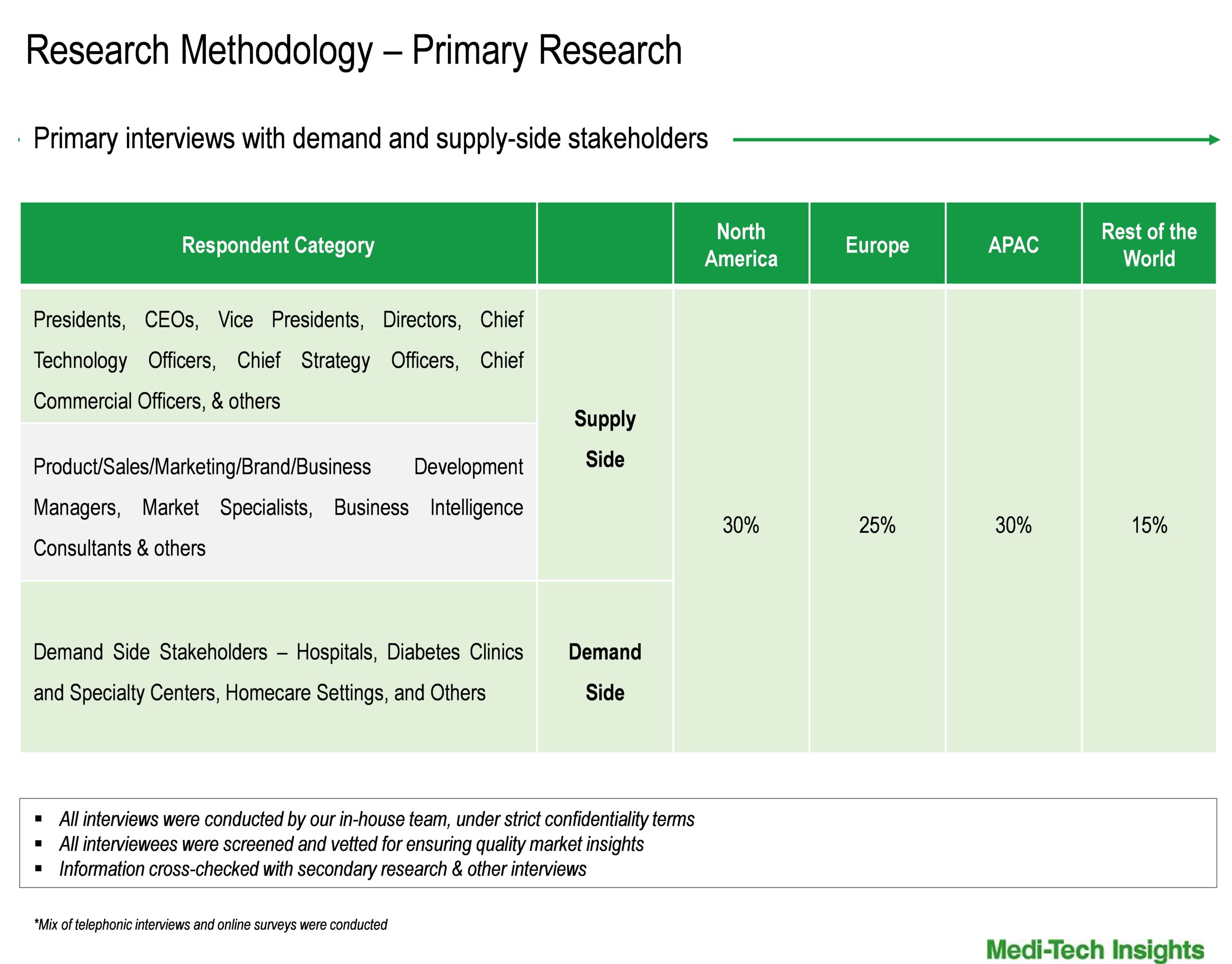
To validate research findings (market size & forecasts, market segmentation, market dynamics, competitive landscape, key industry trends, etc.), extensive primary interviews were conducted with both supply and demand-side stakeholders.
Supply Side Stakeholders:
- Senior Management Level: CEOs, Presidents, Vice-Presidents, Directors, Chief Technology Officers, Chief Commercial Officers
- Mid-Management Level: Product Managers, Sales Managers, Brand Managers, R&D Managers, Business Development Managers, Consultants
Demand Side Stakeholders:
- Hospitals, Diabetes Clinics and Specialty Centers, Homecare Settings, and Others
Breakdown of Primary Interviews
Market Size Estimation
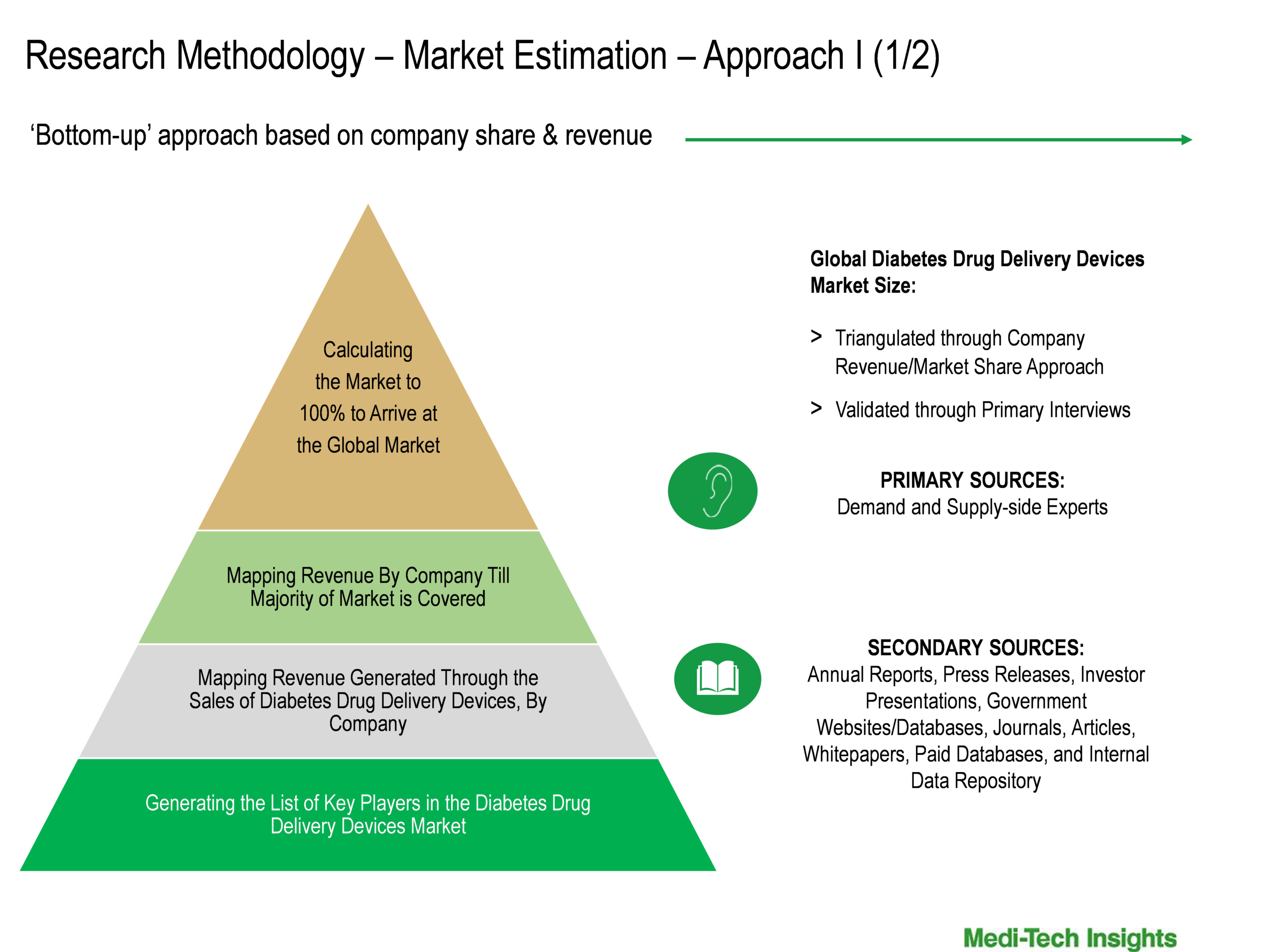
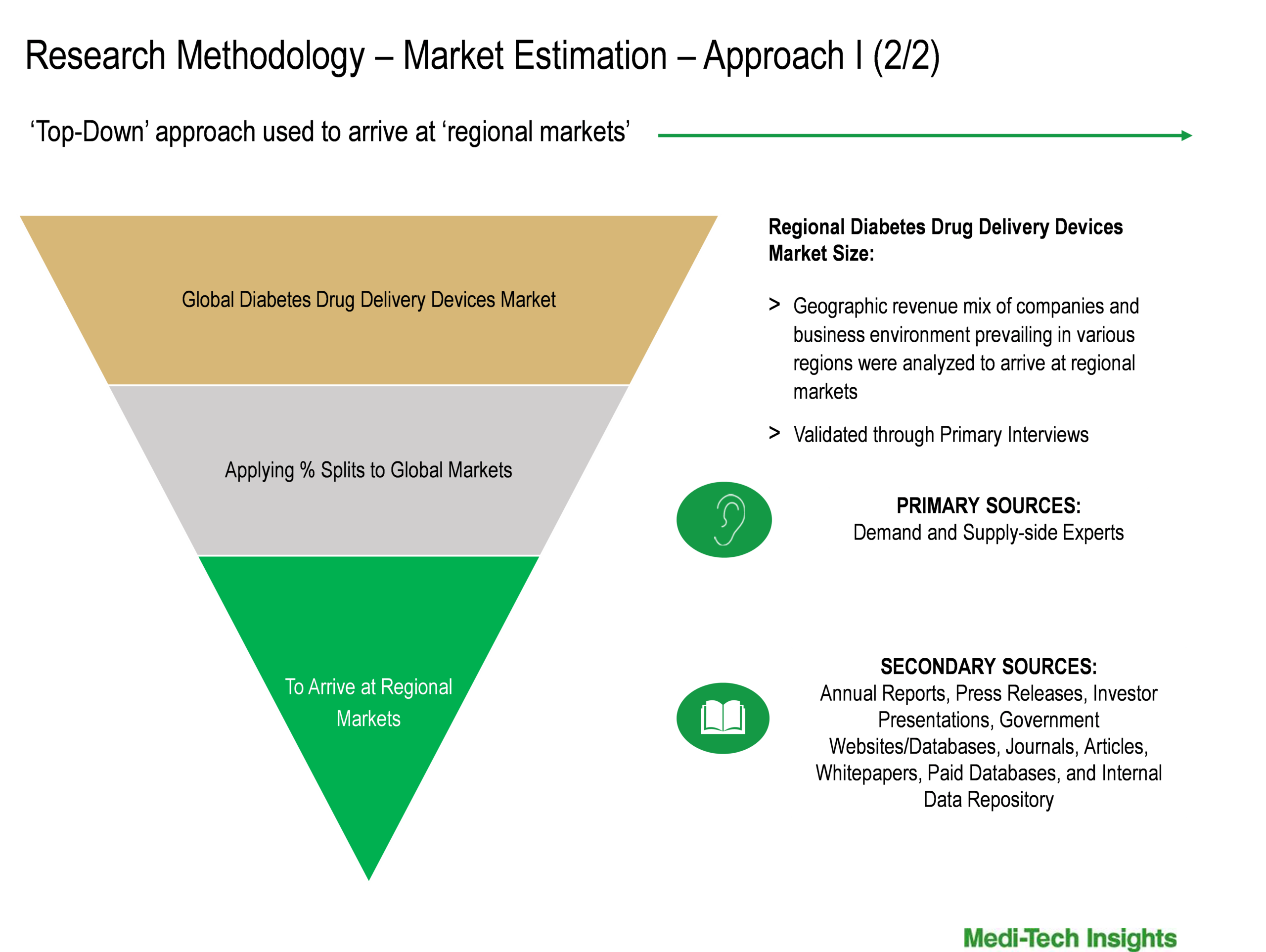
Both ‘Top-Down & Bottom-Up Approaches’ were used to derive market size estimates and forecasts
To learn more about this report, download the PDF brochure
Data Triangulation
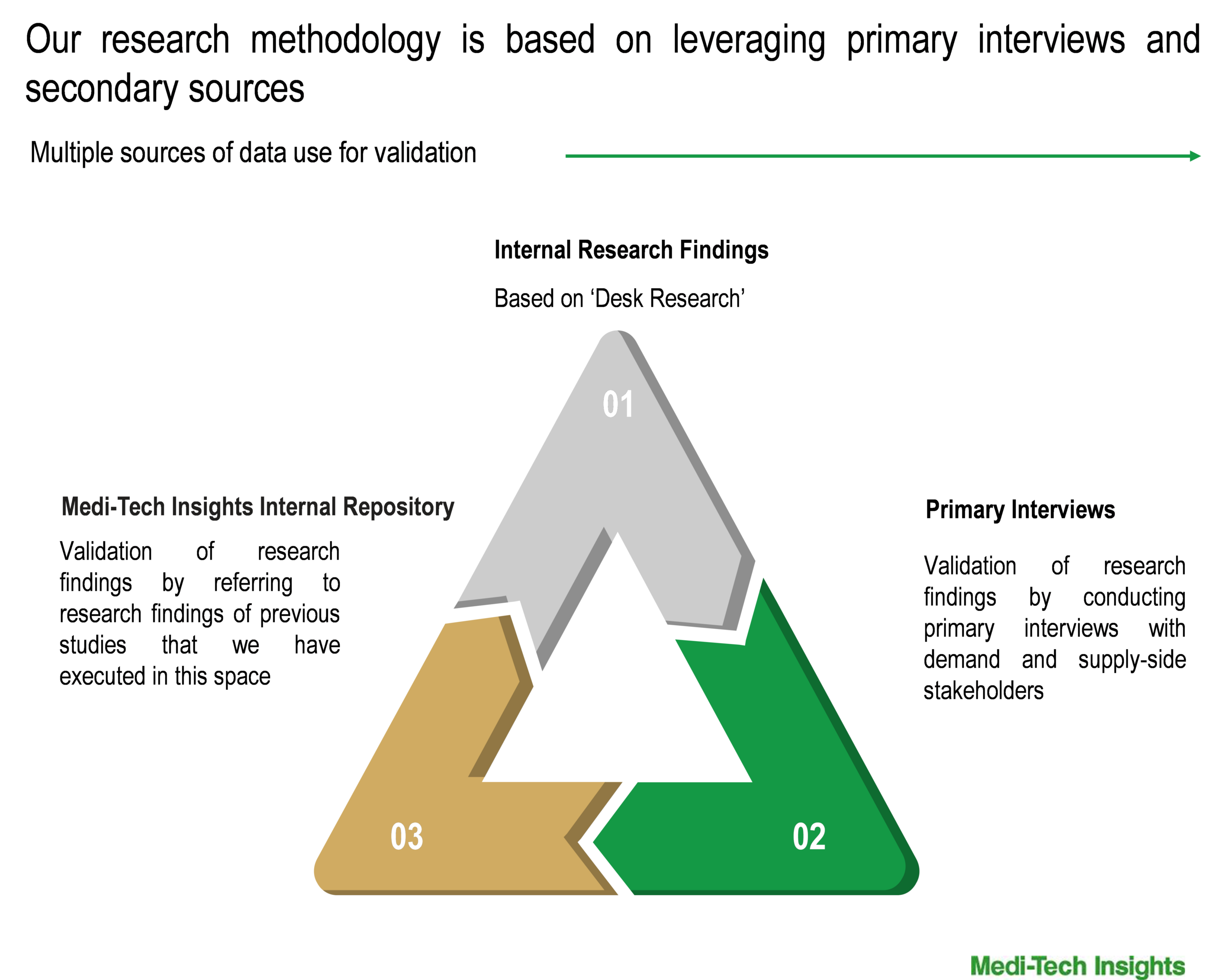
Research findings derived through secondary sources & internal analysis was validated with Primary Interviews, Internal Knowledge Repository and Company’s Sales Data
Frequently Asked Questions (FAQs)
Features of the Report
- Comprehensive Market Coverage
- Market Size and Forecast
- Geographic & Segment Deep Dives
- Strategic Insights & Competitive Landscape
- Timely & Updated Data
- Growth Indicators & Future Outlook
- Quick Turnaround on Queries
- Analyst Support
- Report Customization Available
- Reports in PDF & Excel
